Visual EM

SCAD. Angiography. JETem 2026
Visual EM, Cardiology/Vascular, Current Issue

A Case Report of a 36-year-old Male Diagnosed with a Spontaneous Coronary Artery Dissection

The initial ECG obtained from the patient shows subtle ST-segment elevation noted in leads I, aVL, and V2-V5, suggestive of pathology of the left anterior descending artery. The results of the catheterization revealed a spontaneous coronary artery dissection of the distal portion of the left anterior descending coronary artery, which can be seen in the image of the angiogram, with the diseased portion notated between the brackets.

Open Chest Wound. Photo. JETem 2026
Visual EM, Current Issue, Dermatology, Hematology/Oncology, Infectious Disease

Open Chest Wound with Sternal Fracture in the Emergency Department, a Case Report

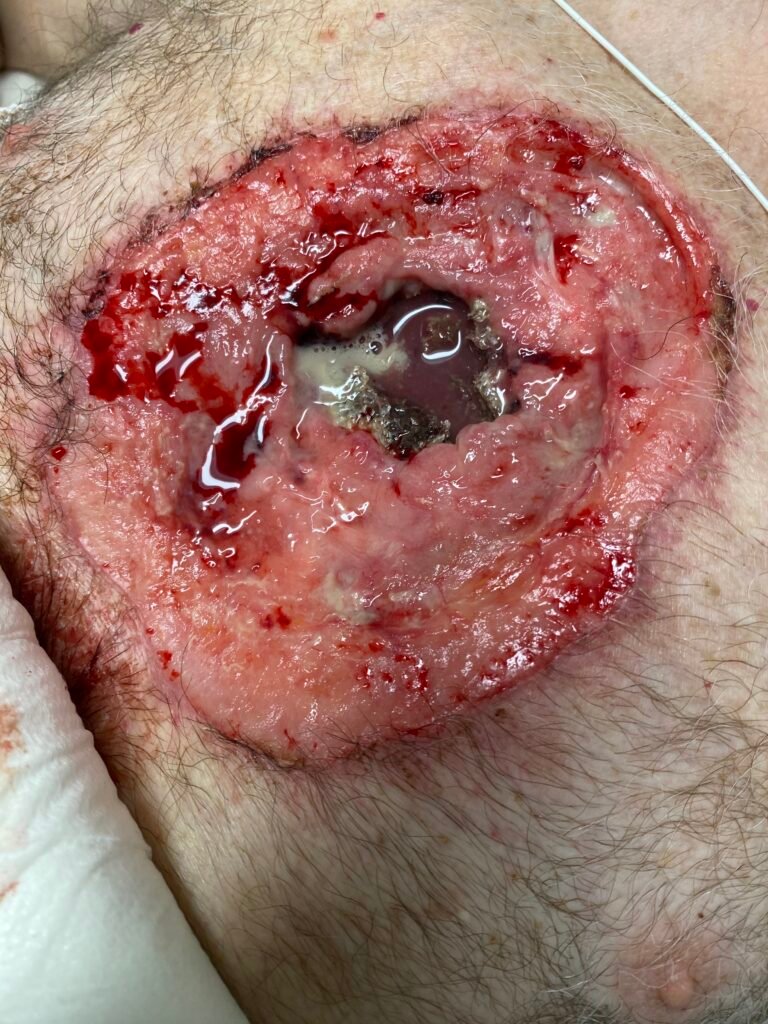
The image demonstrates the large chronic-appearing wound of the patient’s anterior chest as well as the visible fractured segments of the patient’s exposed sternum. The sternum is necrotic appearing concerning for a chronic process including osteomyelitis and malignancy. Purulent drainage is visible on the wound consistent with an infectious process.

Edema Bulla. Photo 1. JETem 2026
Visual EM, Cardiology/Vascular, Current Issue, Dermatology

Effects of Volume Overload: A Case Report of an Edema Bulla

This image shows a large edema bulla on the patient’s right shin. The bulla is 10 x 10 cm, filled with serous fluid, has a spontaneously occurring defect in the skin of the superior portion of the bulla, and is non-erythematous. The bulla is much larger than the 1-5 cm edema bullae described in the literature. As edema bulla is primarily a clinical diagnosis, taking the full history and physical exam into account is essential to recognize these bullae.

Carotid Cavernous Fistula Photograph. JETem 2026
Visual EM, Current Issue, Ophthalmology, Procedures

A Case Report of Carotid Cavernous Fistula: A Commonly Missed Diagnosis

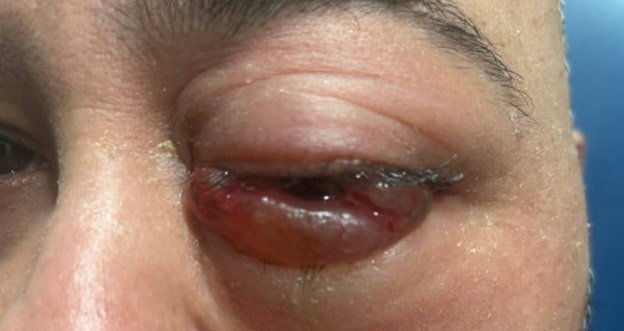
The initial physical exam performed by the ED provider revealed severe left eye chemosis, clear drainage, visual acuity of right eye 20/100 and left eye 20/400, and a left eye IOP of 52. There was a deficit of extraocular movement in all directions of gaze and limitation in all visual fields in the left eye. The MRI showed that at the level of the eye, the left cavernous sinus is asymmetrically enlarged compared to the right (red arrow) with an enlarged left inferior petrosal sinus with internal flow void on the pre-contrast MRI images (blue arrow). The orange arrow notes a central filling defect of the left superior ophthalmic vein on the MRA.

Nonketotic Hyperglycemia Hemichorea. MRI Unnnotated. JETem 2025
Visual EM, Endocrine, Neurology

Case Report of a Patient Presenting with Nonketotic Hyperglycemia Hemichorea

Laboratory tests indicated elevated blood glucose levels (198 mg/dL) with no urinary ketones, anion gap of 12, thyroid stimulating hormone (TSH) of 12 UIU/ml, and an increased glycated hemoglobin (HbA1c) of 14.9%. After initial stroke evaluation with neurology, imaging studies, including computed tomography (CT)/CT angiography (CTA) of the brain and neck, were unremarkable, ruling out structural lesions or acute stroke. Neurology recommended an MRI which showed T1 shortening within the left basal ganglia involving both the caudate nucleus and the lentiform nucleus. T1 shortening indicates changes in the tissue composition or structure that alters how the tissue responds to the MRI pulse, giving the tissue a brighter appearance on MRI (see white arrow).

Calcinosis Cutis. Prior Elbow XR Lateral. JETem 2025
Visual EM, Dermatology, Renal/Electrolytes

Metastatic Calcinosis Cutis in the Emergency Department: A Case Report

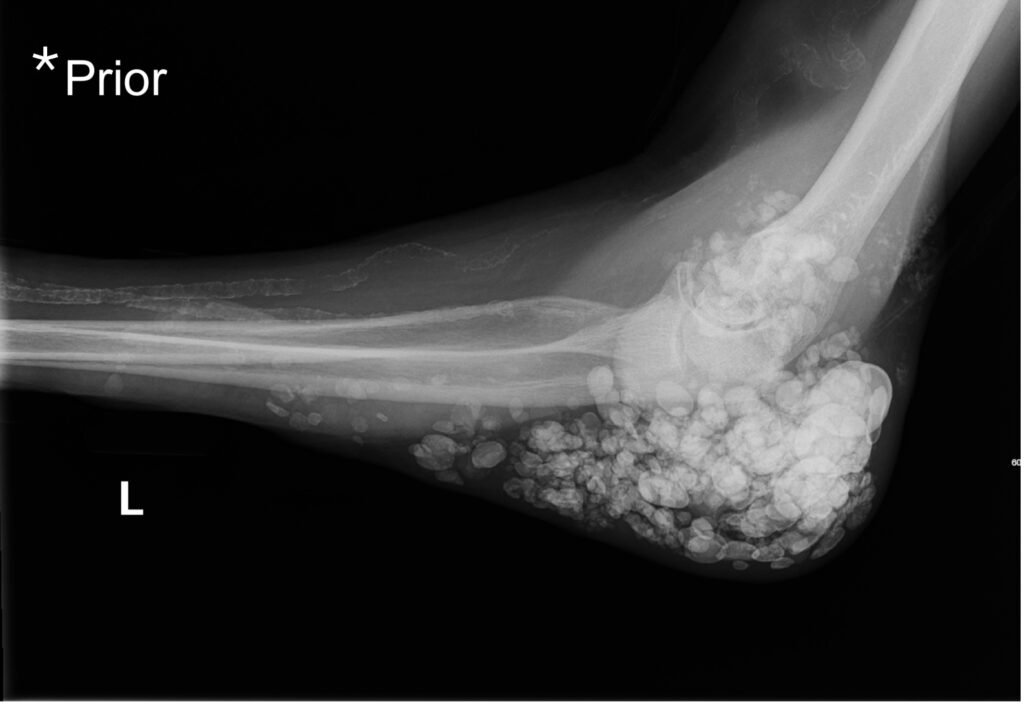
X-ray imaging was obtained of the left elbow and showed soft tissue calcium deposits. Radiology stated, “massive periarticular calcinosis of renal failure obscures fine osseous detail. Several of the largest calcifications have decompressed since the prior exam and may contribute to the drainage observed clinically. Superimposed infection is not excluded.” X-rays with an asterisk are the comparison images from two months previous to the visit. Areas of decompression are highlighted in blue demonstrating that some of the larger calcified nodules are no longer present.

Scroll to Top